|
The Kinta Valley, Perak State, Malaysia
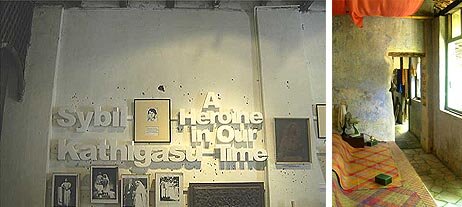
Sybil Kathigasu's Clinic: 74 Main Road, Old Papan

 
Photos by Julie
Photos by Adrian
 In the history of the Japanese Occupation of Southeast Asia, Sybil Kathigasu stands out as a heroine of the Malayan resistance. In the history of the Japanese Occupation of Southeast Asia, Sybil Kathigasu stands out as a heroine of the Malayan resistance.
Sybil Daly, an Eurasian, was born in Medan. A devout Catholic and a vegetarian, she spoke fluent Cantonese. As a non-Chinese midwife, she had some freedom of movement to visit her patients living in the outlying areas. A group of mainly English speakers, both in Papan and further afield, gravitated towards Sybil for she had access to overseas news via a hidden short-wave radio, codenamed 'Josephine'. ...
It was Thean Fook who approached Sybil and asked her to provide treatment and medical supplies to the MPAJA (Malayan Peoples' Anti-Japanese Army) guerrillas. Sybil, who had long anticipated a role in the resistance, realised that 'the time has come.' She nicknamed her new assistant 'Moru' due to his fondness for Indian sour milk. - Kinta Valley, Pioneering Malaysia's Modern Development
 The Japanese Occupation of Malaya lasted from December 1941 to August 1945. Sybil helped hundreds of people before she was arrested, detained and interrogated by the Japanese secret police for two years. In order to extract information, they tortured Sybil and dangled her daughter from a tree over a fire. With her iron will Sybil defied her tormentors. The Japanese Occupation of Malaya lasted from December 1941 to August 1945. Sybil helped hundreds of people before she was arrested, detained and interrogated by the Japanese secret police for two years. In order to extract information, they tortured Sybil and dangled her daughter from a tree over a fire. With her iron will Sybil defied her tormentors.
Three weeks after the Japanese surrender, Sybil was released. For her courage and loyalty, she was summoned to Buckingham Palace to receive the George Medal. Though treated for her injuries in a London hospital, she succumbed on 12 June 1948
 Published posthumously in 1954, Sybil's book No Dram of Mercy is one of the great books of the Malayan war years. Fifty years later, her protégé Ho Thean Fook, alias Moru, wrote two books on Papan -- Tainted Glory and God of the Earth -- before passing away in August 2004. Published posthumously in 1954, Sybil's book No Dram of Mercy is one of the great books of the Malayan war years. Fifty years later, her protégé Ho Thean Fook, alias Moru, wrote two books on Papan -- Tainted Glory and God of the Earth -- before passing away in August 2004.
The approach to Papan is strangely scenic -- giant rain trees growing along a winding stream, limpid mining ponds, a hill slope dotted with Chinese graves, a Kuan Yin Temple, then suddenly in the middle of nowhere, a brick and mortar streetscape.
A nineteenth century mining town petrified in time. Two seemingly desolate rows of shophouses, some barely standing, along a street simply called 'Main Road'. The remains of a boomtown that once stood in the midst of tin-fields as far as the eye could see.
 Remarkably, Papan begins to show signs of life towards sunset, when children come out to play and residents get home from work. Old friends hang out and chatter in the town's only two coffee-shops. Remarkably, Papan begins to show signs of life towards sunset, when children come out to play and residents get home from work. Old friends hang out and chatter in the town's only two coffee-shops.
Just off the Main Road is the house of Raja Bilah (died 1911), the headman of Papan. The Sumatran nobleman's remarkable career as miner-trader-adventurer and leader of his people has inspired a book Raja Bilah and the Mandailings of Perak: 1875-1911 described by an American historian as 'the most exciting book on Malaysian history' she has ever read. The great house was restored by the National Museum several years ago.
 Papan town and Raja Bilah's house have been used as film set, most notably by Oscar-winning production designer Luciana Arrighi for the movie Anna and the King (1999). Luciana was fascinated with Papan -- a near ghost town on the edge of large mining lakes, set in a mysterious cul-de-sac, shrouded and surrounded by dark, forested hills. Papan town and Raja Bilah's house have been used as film set, most notably by Oscar-winning production designer Luciana Arrighi for the movie Anna and the King (1999). Luciana was fascinated with Papan -- a near ghost town on the edge of large mining lakes, set in a mysterious cul-de-sac, shrouded and surrounded by dark, forested hills.
The hills around Papan belong to the Hijau range. Once they were not so peaceful, but reverberated with the sound of gunfire. Sinuous jungle trails, now popular with nature-lovers, used to lead to guerrilla hide-outs. They were first used by hill rat miners, then by the Papan armed resistance and finally by Communist insurgents during the Malayan Emergency (1948-1960).
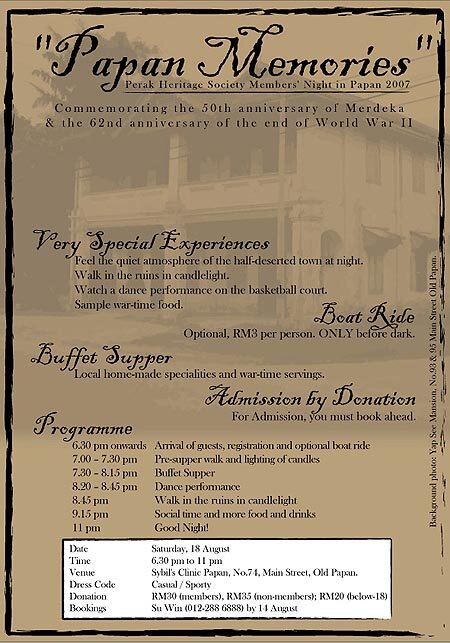
 Half a century after her death, Sybil's clinic at 74 Main Road was turned into a gallery interpreting the story of Papan town. This was done through the private effort of Law Siak Hong, currently President of the Perak Heritage Society. At the back of the house, one finds, unexpectedly, a bright and beckoning stone-and-bamboo garden. Half a century after her death, Sybil's clinic at 74 Main Road was turned into a gallery interpreting the story of Papan town. This was done through the private effort of Law Siak Hong, currently President of the Perak Heritage Society. At the back of the house, one finds, unexpectedly, a bright and beckoning stone-and-bamboo garden.
Sybil's last wish was to have her clinic in Papan serve the poor even after her death, but state medical services have filled the need. Instead, Hong's history gallery, obviously put up with much thought, performs other important functions.
It pays tribute to human integrity and courage in the face of adversity. It strengthens Papan's appeal as a place of history and memory. For visitors, 74 Main Road offers a quiet space to be touched by small town of old Malaya and, hopefully, to rethink its future.
To visit Sybil Kathigasu's clinic,
or for tours of Papan and Ipoh, contact:
Law Siak Hong
hp (+6) 017- 5061875
 
 
Text © Khoo Salma Nasution
References:
Sybil Kathigasu, No Dram of Mercy with an introdcution by Sir Richard Winstedt, London: Neville Spearman. 1954.
Sybil Kathigasu, No Dram of Mercy, preface by Cheah Boon Kheng, Singapore: Oxford University Press, 1983.
Sybil Kathigasu, No Dram of Merch, The Story of a Woman's Courage during the Japanese Occupation of Malaya, Kuala Lumpur: Promentheus Enterprise, 2006.
Faces of courage: incorporating No Dram of Mercy, The Papan Guerillas and Mrs K by Chin Peng and Exploring the Legend by Norma Miraflor & Ian Ward: a revealing historical appreciation of colonial Malaya's legendary Kathigasu family, Singapore: Media Masters, 2006.
Ho Thean Fook, God of the Earth, Ipoh: Perak Academy. December, 2000.
Ho Thean Fook, Tainted Glory, Kuala Lumpur: University of Malaya Press, 2000.
Khoo Salma Nasution & Abdur-Razzaq Lubis, Kinta Valley: Pioneering Malaysia's Modern Development, Perak Academy, 2005.
Abdur-Razzaq Lubis & Khoo Salma Nasution, Raja Bilah and the Mandailings of Perak (1875-1911), Malayan Branch of the Royal Asiatic Society (MBRAS), 2003.
Horas Mandailing website www.mandailing.org
|
Home

Papan
Press & Reviews
* * *

* * *
PERAK HERITAGE SOCIETY
Heritage News
A bi-monthly newsletter
of the Perak Heritage Society
edited and produced by
Law Siak Hong
Download here
Volume 5, Issue 6
November-December 2008
Volume 5, Issue 4 & 5
July-October 2008
Volume 5, Issue 3
May-June 2008
Volume 5, Issue 1 & 2
January-April 2008
Volume 4, Issue 6
November-December 2007
Volume 4, Issue 5
September-October 2007
Volume 4, Issue 4
July-August 2007
* * *
BOOKS
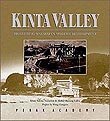
Kinta Valley: Pioneering Malaysia’s Modern Development
Khoo Salma Nasution
& Abdur-Razzaq Lubis
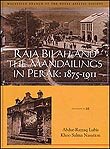
Raja Bilah and the Mandailings in Perak: 1875-1911
Abdur-Razzaq Lubis
& Khoo Salma Nasution
For more information,
contact: Areca Books
10200 Penang, Malaysia
Tel:
Fax:
Email:
Website: www.arecabooks.com
|
